Overview
Roundabouts have emerged as a modern and efficient alternative to traditional intersections, offering many benefits that improve traffic flow, safety, and overall urban planning. The concept of roundabouts has been around for centuries, but modern roundabouts as we know them today originated in the early 20th century. The first modern roundabout was built in 1907 in the United Kingdom, in the town of Letchworth Garden City. This early design was refined and popularized in the UK and other countries. The use of roundabouts has since spread globally, and they are now standard traffic features in many parts of the world. We will discuss the advantages of roundabouts over traditional intersections, emphasizing their effectiveness in enhancing traffic management, safety, and environmental sustainability.
Upon relocating to Bend, Oregon, in 2020, I was pleasantly intrigued by the prevalence of roundabouts within the city's infrastructure. Before residing in Bend, my domicile was situated in New South Wales, Australia, where roundabouts were ubiquitous at intersections. Despite the inversion of driving direction compared to the American system, I was comprehensively familiar with navigating roundabouts and recognized their inherent
The widespread implementation of roundabouts, with their proven benefits in enhancing traffic flow, safety, and environmental sustainability, is a paramount and logical choice for replacing traditional intersections in modern urban planning. Transportation systems are dynamic and require adaptable solutions to meet the growing demands of urbanization.
Roundabouts have emerged as a modern and efficient alternative to traditional intersections, offering many benefits that improve traffic flow, safety, and overall urban planning. The concept of roundabouts has been around for centuries, but modern roundabouts as we know them today originated in the early 20th century. The first modern roundabout was built in 1907 in the United Kingdom, in the town of Letchworth Garden City. This early design was refined and popularized in the UK and other countries. The use of roundabouts has since spread globally, and they are now standard traffic features in many parts of the world. We will discuss the advantages of roundabouts over traditional intersections, emphasizing their effectiveness in enhancing traffic management, safety, and environmental sustainability.
Upon relocating to Bend, Oregon, in 2020, I was pleasantly intrigued by the prevalence of roundabouts within the city's infrastructure. Before residing in Bend, my domicile was situated in New South Wales, Australia, where roundabouts were ubiquitous at intersections. Despite the inversion of driving direction compared to the American system, I was comprehensively familiar with navigating roundabouts and recognized their inherent
The widespread implementation of roundabouts, with their proven benefits in enhancing traffic flow, safety, and environmental sustainability, is a paramount and logical choice for replacing traditional intersections in modern urban planning. Transportation systems are dynamic and require adaptable solutions to meet the growing demands of urbanization.
Improved Traffic Flow
Roundabouts facilitate a continuous traffic flow, eliminating the need for traffic signal stops and the associated delays common in traditional intersections. The circular design encourages vehicles' smooth, constant movement, reducing congestion during peak hours.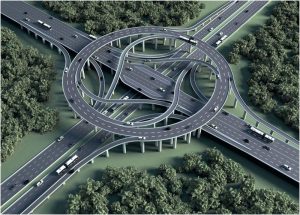 Research indicates that roundabouts significantly reduce travel time and fuel consumption, making them an efficient solution for addressing the challenges posed by increasing urbanization.“Supporting this claim, a study conducted by the Insurance Institute for Highway Safety (IIHS) in the United States found that roundabouts result in a 39% reduction in overall traffic delays and a 76% reduction in delays caused by stops.” By prioritizing the continuous movement of vehicles, roundabouts contribute to more predictable and shorter travel times for commuters.
Research indicates that roundabouts significantly reduce travel time and fuel consumption, making them an efficient solution for addressing the challenges posed by increasing urbanization.“Supporting this claim, a study conducted by the Insurance Institute for Highway Safety (IIHS) in the United States found that roundabouts result in a 39% reduction in overall traffic delays and a 76% reduction in delays caused by stops.” By prioritizing the continuous movement of vehicles, roundabouts contribute to more predictable and shorter travel times for commuters.
Enhanced Safety
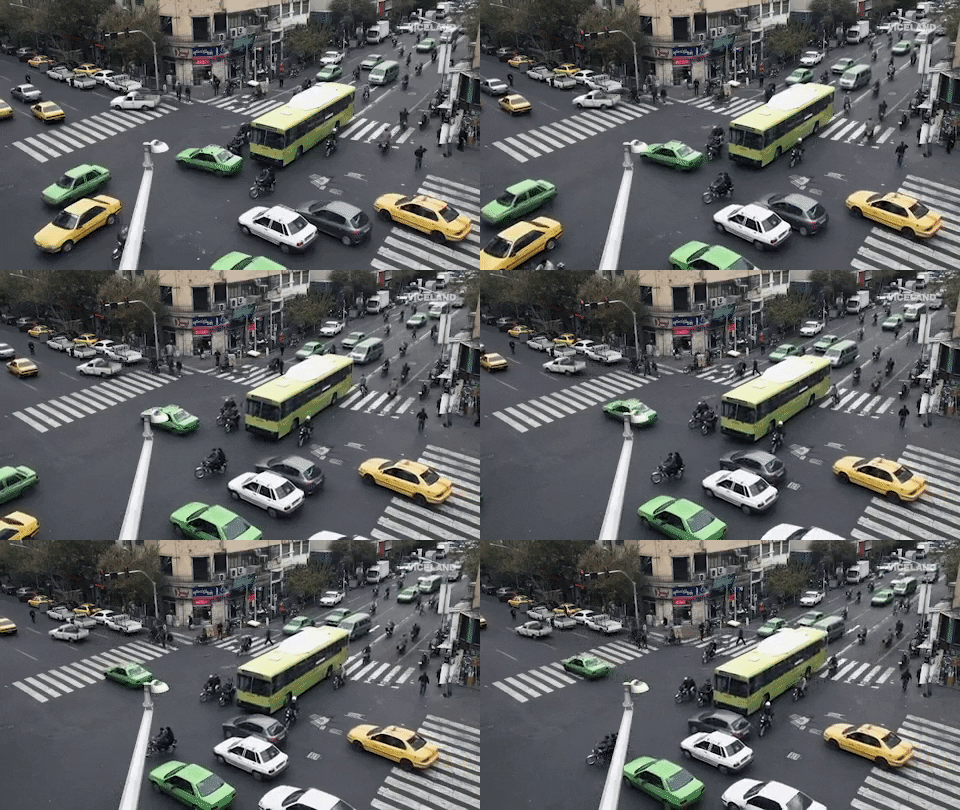 One of the most compelling arguments for the adoption of roundabouts is the improvement in road safety. The design of roundabouts, with their slower speeds and reduced conflict points, inherently minimizes the severity of accidents. Compared to traditional intersections with signal controls, roundabouts experience fewer severe crashes, resulting in fewer injuries and fatalities.
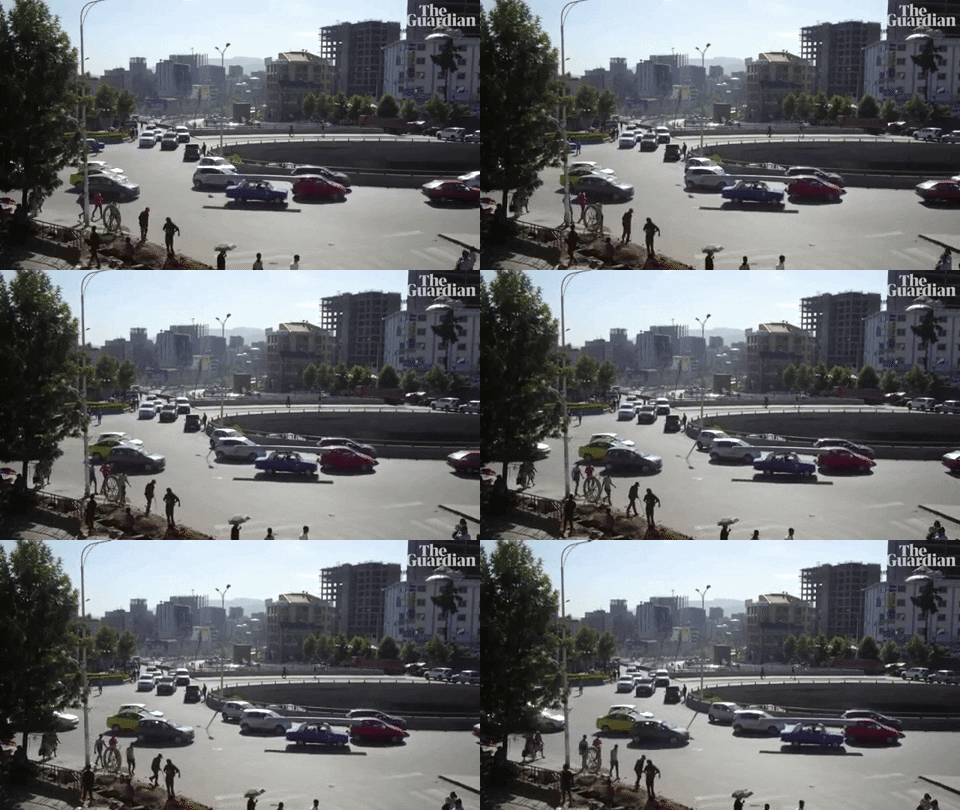 “The IIHS has consistently reported a significant reduction in fatal crashes (about 90%) and overall crashes (39%) at intersections where roundabouts have been introduced.”2 The circular layout of roundabouts eliminates high-speed, right-angle collisions and discourages risky behaviors, such as red-light running. This makes roundabouts a crucial tool in the ongoing efforts to enhance road safety and reduce the societal costs associated with accidents.
Pedestrian and Cyclist-Friendly Design
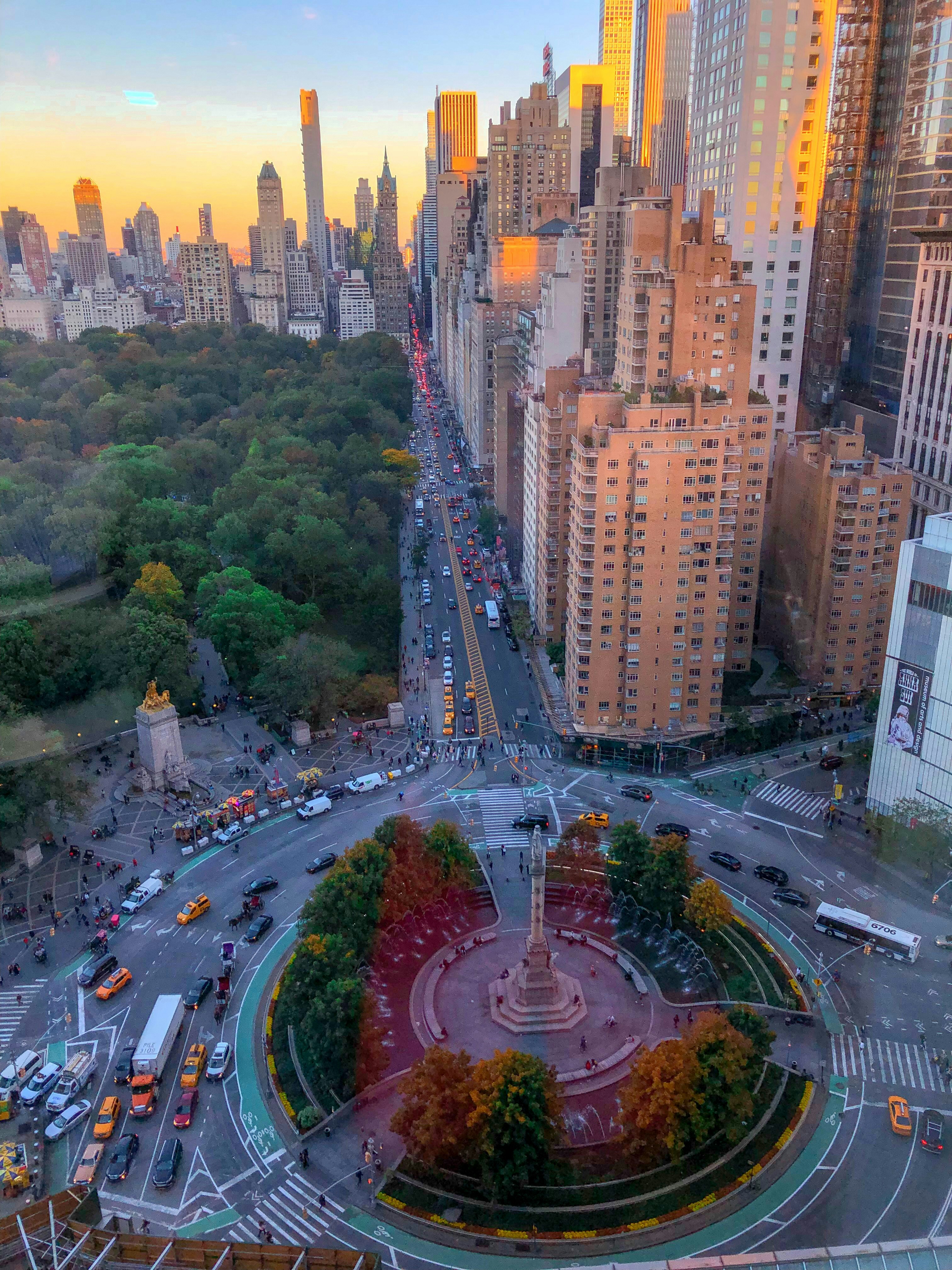 Unlike traditional intersections, which often prioritize vehicular traffic over pedestrians and cyclists, roundabouts are designed to focus on the safety and convenience of all road users. Roundabouts feature dedicated crosswalks, refuge islands, and reduced crossing distances, making them more pedestrian-friendly. Additionally, cyclists can navigate roundabouts more quickly due to the continuous traffic flow, minimizing conflicts between cyclists and motorists. Studies have shown that roundabouts result in fewer pedestrian and cyclist accidents than traditional intersections. “The European Transport Safety Council notes that roundabouts contribute to a 72% reduction in pedestrian accidents and a 44% reduction in cyclist accidents.” This pedestrian and cyclist-friendly design aligns with contemporary urban planning goals emphasizing multimodal transportation and creating more inclusive, accessible urban spaces.
Environmental Sustainability
Roundabouts contribute to environmental sustainability by reducing idling times and fuel consumption. The continuous traffic flow minimizes emissions associated with frequent stops and accelerations, making roundabouts an eco-friendly alternative.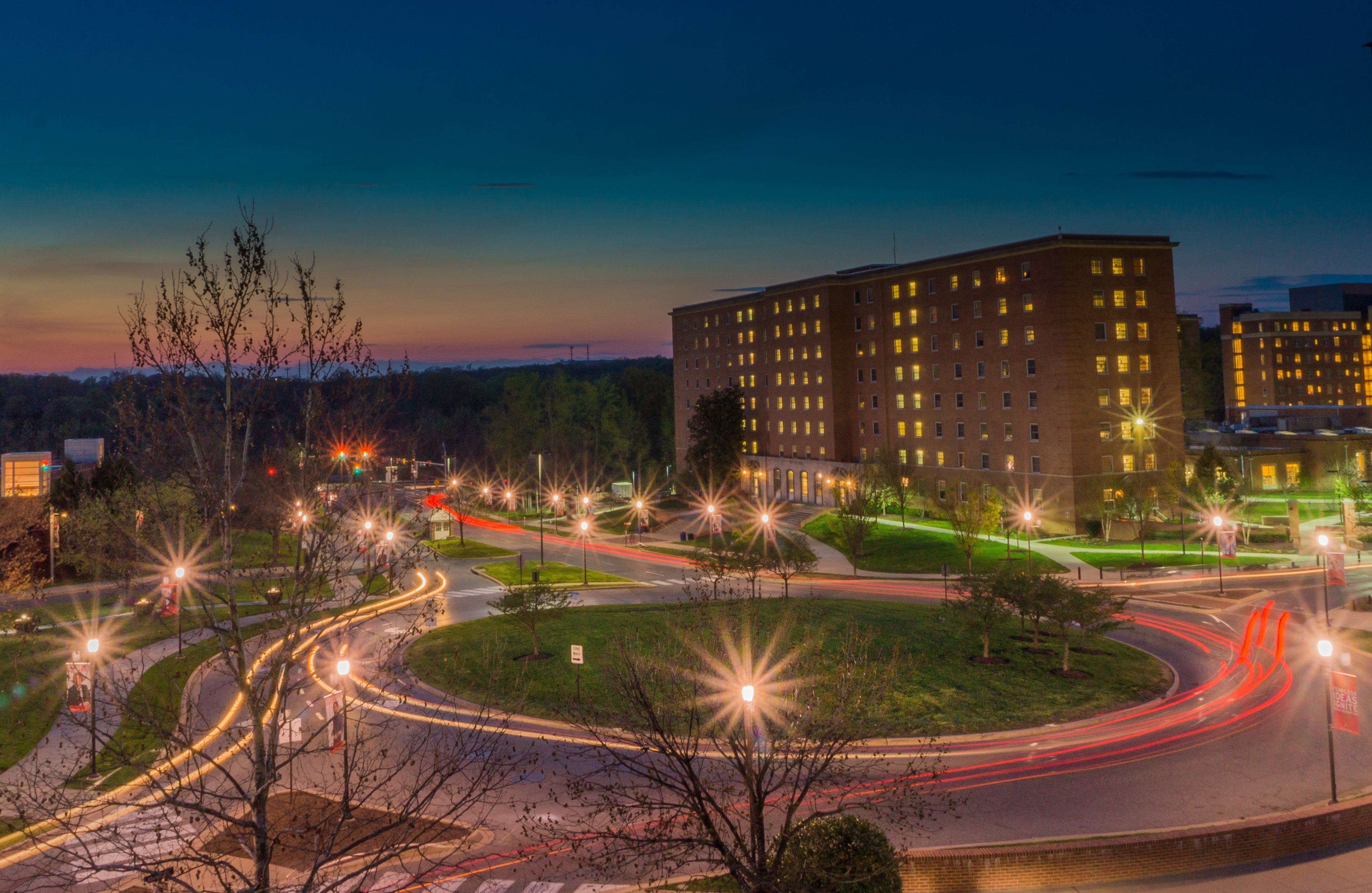 Moreover, the landscaping opportunities presented by the central islands of roundabouts allow for incorporating green spaces, adding aesthetic value, and contributing to overall urban environmental quality.A case study by the Environmental Protection Agency (EPA) found that roundabouts can lead to a 30-50% reduction in fuel consumption and emissions compared to signalized intersections.” This reduction in environmental impact aligns with the growing global awareness of the need for sustainable transportation solutions and the imperative to address climate change.
Moreover, the landscaping opportunities presented by the central islands of roundabouts allow for incorporating green spaces, adding aesthetic value, and contributing to overall urban environmental quality.A case study by the Environmental Protection Agency (EPA) found that roundabouts can lead to a 30-50% reduction in fuel consumption and emissions compared to signalized intersections.” This reduction in environmental impact aligns with the growing global awareness of the need for sustainable transportation solutions and the imperative to address climate change. How To Navigate a Roundabout
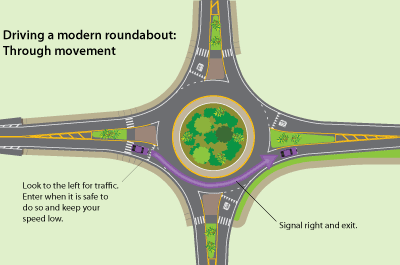
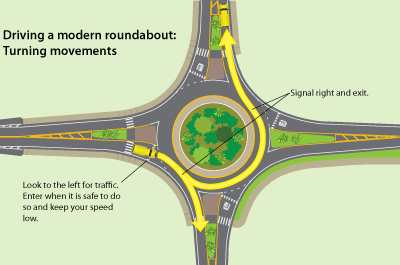
- Slow down when approaching a roundabout - The signs at the entrance are yield signs
- Circulate counterclockwise around the circle - You will drive to the right
- Yield to traffic in the roundabout - Vehicles and pedestrians in the roundabout have the right-of-way
- Signal your intensions within the roundabout - Use your turn signal to indicate which direction you will be exiting
- Do not stop within the circular portion of the roundabout - Do not stop unless there is a pedestrian in the crosswalk or it is unsafe to proceed